Introduction
Vertigo and dizziness can be unsettling, frustrating and difficult to describe. Some people feel as though the room is spinning. Others feel light-headed, unsteady, foggy, nauseated or as though they are being pulled to one side.
For some patients, symptoms last only seconds. For others, dizziness can continue for weeks or months, affecting walking, driving, work, exercise, shopping, screen use and confidence in daily life.
At Melbourne Balance Clinic, we provide specialist assessment for vertigo, dizziness and balance disorders. Our aim is to identify the cause of your symptoms, explain what is happening in clear language, and develop a treatment plan that helps you move forward with confidence.
What Is the Difference Between Vertigo and Dizziness?
Dizziness and vertigo can be difficult for people to describe accurately.
However, there are consensus documents that detail agreed-upon definitions of these terms from the Bárány Society International Classification of Vestibular Disorders (ICVD) documents, which describe:
Dizziness as:
- “the sensation of disturbed or impaired spatial orientation without a false or distorted sense of motion”
Vertigo as:
- “the false sensation that the visual surround is spinning or flowing” OR “the sensation of self-motion when no self-motion is occurring”
However, people commonly use these terms to describe many different sensations, including feeling faint, woozy, light-headed, unsteady, disoriented or off balance. Research also demonstrates that patients have difficulty identifying the “quality” of the sensation.
Understanding the exact nature of your symptoms is important. Brief spinning when rolling over in bed may suggest a different diagnosis from constant light-headedness, dizziness in busy shopping centres, or unsteadiness when walking in the dark.
How Common Are Vertigo and Dizziness?
Vertigo and dizziness are common reasons people seek medical care. They can affect adults of all ages, but become more common and often more complicated with age.
Australian research has shown that dizziness and vertigo are not rare symptoms. A 10-year Australian longitudinal study reported a cumulative incidence of dizziness or vertigo of 39.8%, with vestibular vertigo accounting for 27.1% of cases.
This is one reason dizziness should not simply be dismissed as stress, ageing or “just vertigo”. In many cases, there is a specific underlying cause that can be treated, managed or improved.
Why Do I Feel Dizzy or Off Balance?
Balance depends on several body systems working together. Your inner ears detect head movement and position in relation to gravity. Your eyes help you understand your orientation with respect to the visual surroundings. Your sense of “proprioception” provides your brain with information about where your muscles and joints are. Your brain combines these signals to keep you steady and allow you to stand and walk.
Dizziness can occur when one or more of these systems is not working properly, or when the brain receives conflicting information. For example, a problem in one inner ear may make the brain think your head is moving when it is not. Nerve problems in the feet can also reduce important sensory feedback from contact with the ground.
Even medication, blood pressure changes and anxiety can influence your sense of balance.
In other cases, the individual systems may be working normally, but the processing of this information can be altered (for example, in migraine), which can make you more sensitive to movement, light or visual patterns. This altered processing of sensory information can also lead to dizziness or vertigo.
This is why a careful diagnosis matters. The symptom may be “dizziness”, but the cause can be very different from one person to another.
What Are the Most Common Causes of Vertigo?
There are many possible causes of vertigo and dizziness. Some begin in the inner ear balance organs, also known as the vestibular organs. Others relate to migraine, the brain, the peripheral nerves, medications or a combination of factors.
Common causes include:
Benign paroxysmal positional vertigo (BPPV), which often causes brief spinning vertigo when rolling over, lying down, looking up or bending forward.
Vestibular migraine, which can cause vertigo, dizziness, motion sensitivity, visual sensitivity and imbalance, sometimes with little or no headache.
Ménière’s disease, which may cause repeated attacks of vertigo with fluctuating hearing loss, tinnitus or pressure in one ear.
Vestibular neuritis, also called acute unilateral vestibulopathy, which can cause sudden severe vertigo lasting days, often with nausea and imbalance.
Persistent postural-perceptual dizziness (PPPD), which can cause ongoing dizziness or unsteadiness, often worse when standing, walking, using screens or being in visually busy environments.
Bilateral vestibulopathy, where both inner ear balance systems are reduced, often causing imbalance and blurred vision during walking.
Neurological or systemic causes, including migraine, stroke, neuropathy, medication effects, blood pressure changes and other medical conditions.
Some patients have more than one contributing factor. For example, BPPV may trigger ongoing motion sensitivity, or vestibular migraine may overlap with PPPD. A specialist assessment helps identify the main drivers of your symptoms.
Could My Symptoms Be Coming from the Inner Ear?
Yes. Many causes of vertigo come from the vestibular system, which is the balance system of the inner ear.
The inner ear contains small balance organs that detect head movement. These organs send signals through the vestibular nerve to the brain. When these signals are disrupted, the brain may receive mismatched information, causing vertigo, nausea, imbalance, motion sensitivity or blurred vision with head movement.
Inner ear causes may be more likely if your symptoms are triggered by head position, associated with spinning, linked to nausea, or occur with hearing symptoms such as tinnitus, ear fullness or fluctuating hearing loss.
However, not all dizziness comes from the inner ear. A balance clinic assessment helps determine whether your symptoms are vestibular, neurological, migraine-related, circulatory or due to another cause.
Could Migraine Cause Dizziness Without a Headache?
Yes. Vestibular migraine is a common but often under-recognised cause of dizziness. Some patients with vestibular migraine have a clear history of migraine headaches. Others mainly experience dizziness, motion sensitivity, light sensitivity, sound sensitivity, nausea, visual discomfort or imbalance. They may not realise migraine biology is involved because headache may be mild, occasional or absent.
Vestibular migraine can also be confusing because tests may be normal between episodes. Symptoms can overlap with BPPV, Ménière’s disease, PPPD and anxiety-related dizziness.
A careful history is often the key. Your doctor may ask about headache history, motion sickness, family history of migraine, sleep patterns, hormonal patterns, visual triggers, stress, travel sensitivity and sensitivity to light or sound.
When Should Dizziness Be Taken Seriously?
Most dizziness is not caused by a life-threatening condition. However, some symptoms require urgent medical attention.
This page is general information and is not a substitute for urgent medical care. If symptoms are acute, severe or concerning, it is safer to seek urgent assessment first.
How Is Vertigo Diagnosed?
Diagnosis starts with listening carefully to your symptoms.
Your doctor will usually ask what the dizziness feels like, how long it lasts, whether it is triggered by movement or position, and whether it occurs with nausea, headache, hearing symptoms, visual sensitivity, falls or neurological symptoms.
The examination may include assessment of eye movements, balance, walking, coordination, positional triggers and neurological function. These details can provide important clues.
For example, vertigo lasting seconds when rolling over in bed may suggest BPPV. Vertigo lasting hours with light sensitivity or migraine features may suggest vestibular migraine. Sudden severe vertigo lasting days may suggest vestibular neuritis, although other causes also need to be considered.
What Tests Might I Need?
Not every patient needs every test. Testing should be guided by your symptoms, examination findings and likely diagnosis.
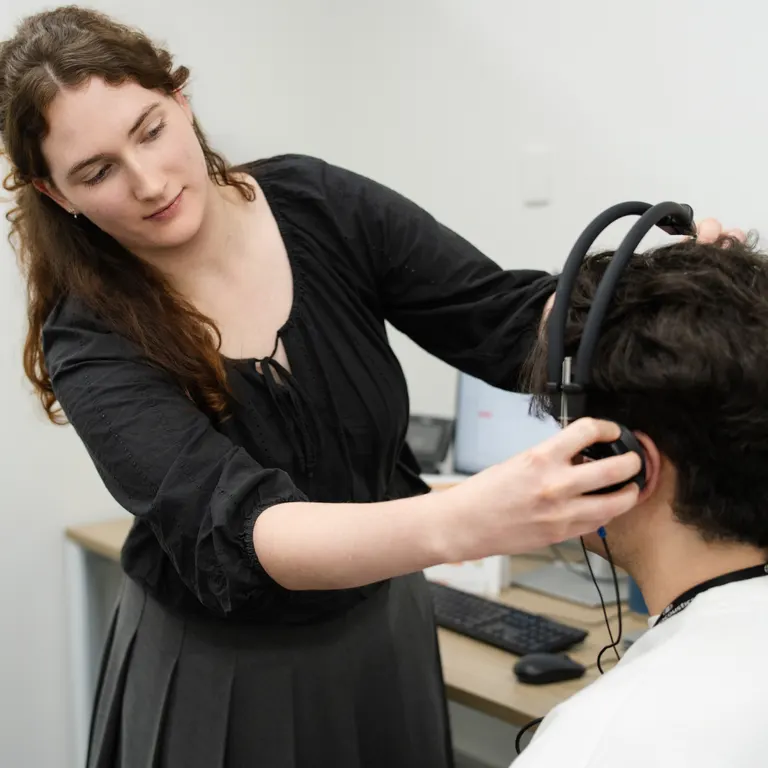
Melbourne Balance Clinic may recommend vestibular function testing when a more detailed assessment of the inner ear balance system is needed.
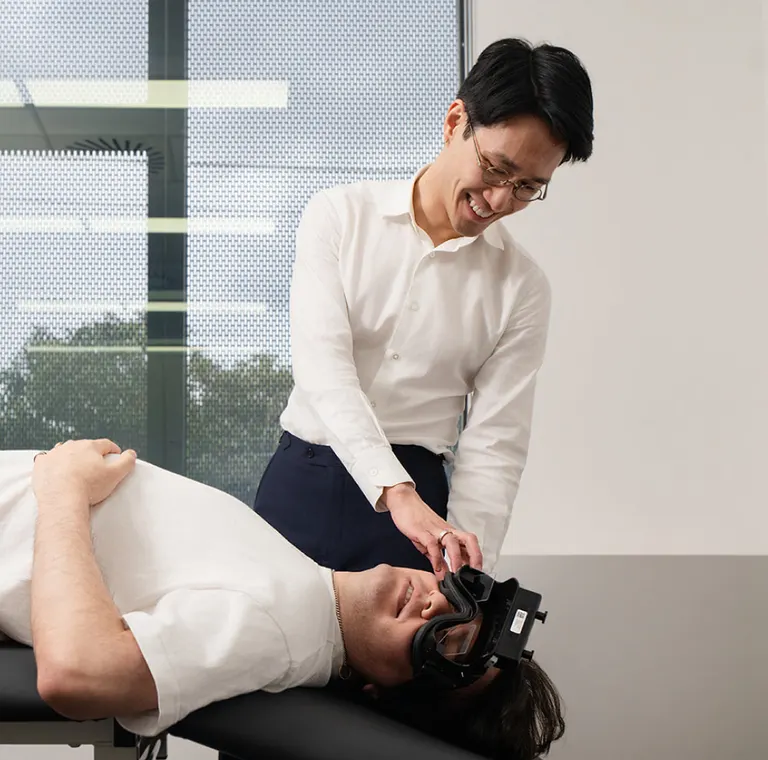
Testing vestibular function and analysing eye movements using specialised equipment can help us further differentiate the cause of your symptoms. This can help identify whether one or both vestibular systems are reduced and whether the findings match the suspected diagnosis.
Some patients may benefit from positioning chair assessment and treatment, particularly when BPPV is complex, recurrent or difficult to treat with standard manoeuvres.
Vestibular event monitoring may be considered when symptoms are intermittent and difficult to capture during a standard appointment.
Nerve conduction studies or electromyography may be recommended if imbalance could be related to neuropathy, nerve dysfunction or neuromuscular disease.
The aim of testing is not simply to collect results. It is to clarify the diagnosis and guide the right treatment plan.
Can Vertigo and Dizziness Be Treated?
Yes. Many causes of vertigo and dizziness can be treated, improved or managed more effectively once the diagnosis is clear.
For BPPV, treatment often involves repositioning manoeuvres that move displaced inner ear crystals back to the correct location. This can be highly effective when the affected canal is correctly identified.
For vestibular migraine, treatment may involve trigger management, sleep and routine improvement, migraine prevention, medication where appropriate, and vestibular rehabilitation in selected cases.
For vestibular neuritis, treatment may include short-term symptom control, monitoring recovery and vestibular rehabilitation to help the brain compensate for imbalances in vestibular function.
For Ménière’s disease, treatment may involve dietary strategies, regular preventative medication, hearing assessment, creating an action plan for acute episodes and in some cases further referrals to ENT specialists for more invasive therapies depending on attack frequency and severity.
For PPPD, treatment may include education, vestibular rehabilitation, gradual exposure to movement or visual triggers, referral for cognitive behavioural therapy, and management of co-morbid migraine & anxiety where relevant.
For imbalance related to ageing, neuropathy, bilateral vestibular loss or other neurological disease, treatment may focus on reviewing risk factors for falls, performing genetic testing, providing tailored advice on exercise/rehabilitation measures and involving allied health to mitigate future risk.
Why Is Balance Important as We Get Older?
Dizziness and imbalance become increasingly important with age because they can increase the risk of falls, injury and loss of independence.
Falls are a major health issue for older Australians. The Australian Institute of Health and Welfare reports that in 2023–24, Australians aged 65 and over were almost 12 times as likely to be hospitalised due to a fall as adults aged 25 to 44 years.
For older patients, dizziness may have several contributing factors. Inner ear balance loss, reduced vision, peripheral neuropathy, medication effects, reduced strength and neurological conditions can all contribute.
For example, BPPV is the most common vestibular cause of vertigo and dizziness. If left untreated, it has been linked to an increased risk of falls. BPPV is also commonly undiagnosed in those at increased risk of falls.
This underscores the importance of a proper assessment that can help identify treatable causes, reduce avoidable risk and support independence.
Why Choose Melbourne Balance Clinic?
Melbourne Balance Clinic has been developed specifically for people with vertigo, dizziness and balance disorders.
Many patients with dizziness see several clinicians before receiving the correct diagnosis. Symptoms may be intermittent, difficult to describe and hard to capture during a standard appointment. Some people are told their tests are normal, even though they still feel unsteady or unwell.
We provide focused assessment of vestibular and neurological causes of dizziness. We consider common conditions such as BPPV and vestibular migraine, while also assessing for more complex or overlapping causes such as PPPD, bilateral vestibulopathy, neuropathy, neurological disease and recurrent vestibular disorders.
By providing both a consultation and onsite testing, we aim to streamline a patient’s healthcare journey. Our ultimate aim is to provide clear answers, practical treatment and coordinated care.
When Should I Book an Appointment?
You should consider booking an appointment if you have recurrent vertigo, persistent dizziness, unexplained imbalance, motion sensitivity, dizziness triggered by position changes, dizziness associated with migraine features, or balance problems affecting your confidence.
You may also benefit from assessment if you have been told you have “vertigo” but do not know which type, if symptoms keep returning, or if previous treatment has not helped.
Book an Appointment for Vertigo and Dizziness in Melbourne
Vertigo and dizziness can be disruptive, but many causes are treatable once the right diagnosis is made.
Melbourne Balance Clinic provides specialist assessment for vertigo, dizziness and balance disorders, with access to advanced vestibular testing where clinically appropriate.
Contact Melbourne Balance Clinic to arrange an appointment and take the next step towards understanding and managing your symptoms.
Last reviewed October 2026
Sources8 references
- Healthdirect; Vertigo: https://www.healthdirect.gov.au/vertigo
- PubMed; Ten-year incidence, predictors and impact of dizziness and vertigo in community-dwelling adults: https://pubmed.ncbi.nlm.nih.gov/38006814
- Australian Institute of Health and Welfare; Injury in Australia – Falls: https://www.aihw.gov.au/reports/injury/falls
- Newman-Toker, D.E., Cannon, L.M., Stofferahn, M.E., Rothman, R.E., Hsieh, Y.H., Zee, D.S., 2007. Imprecision in Patient Reports of Dizziness Symptom Quality: A Cross-sectional Study Conducted in an Acute Care Setting. Mayo Clinic Proceedings 82, 1329–1340. https://doi.org/10.4065/82.11.1329
- Harriott, A.M., Schwedt, T.J., 2014. Migraine is Associated With Altered Processing of Sensory Stimuli. Curr Pain Headache Rep 18, 458. https://doi.org/10.1007/s11916-014-0458-8
- Kroenke, K., Hoffman, R.M., Einstadter, D., 2000. How Common Are Various Causes of Dizziness? A Critical Review: Southern Medical Journal 93, 160–167. https://doi.org/10.1097/00007611-200093020-00001
- Hawke, L.J., Barr, C.J., McLoughlin, J.V., 2021. The frequency and impact of undiagnosed benign paroxysmal positional vertigo in outpatients with high falls risk. Age and Ageing 50, 2025–2030. https://doi.org/10.1093/ageing/afab122
- Klarendic, M., Joffily, L., Rodrigues, F.A., Gomes, T.A., Edlow, J., Koohi, N., Kaski, D., 2024. The dizzy patient: duration from symptom onset to specialist review. J Neurol 271, 7024–7025. https://doi.org/10.1007/s00415-024-12652-2