
OUR TEAM
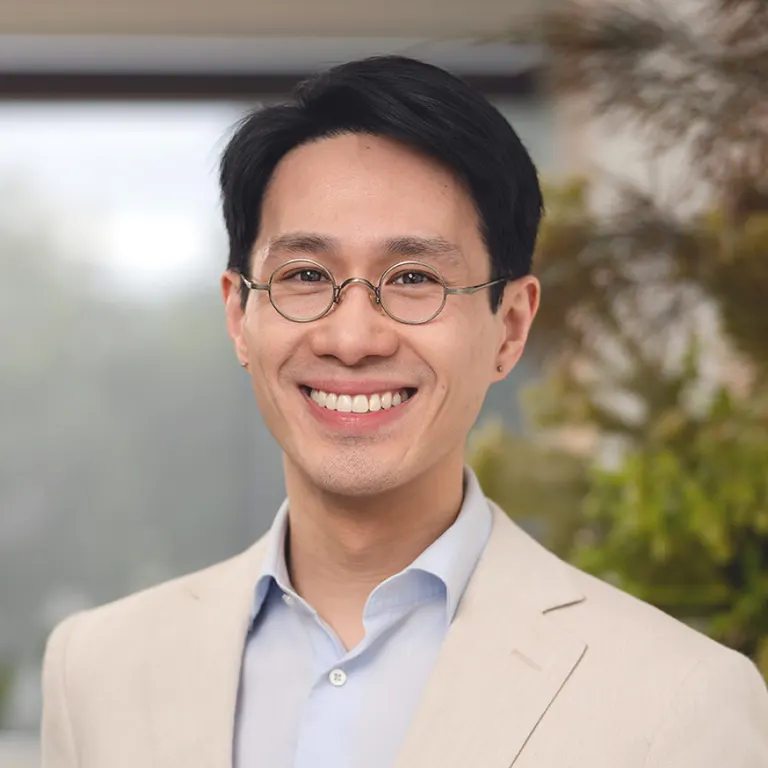
Dr Nicholas Yang
MBBS, FRACP
Neurologist, Neuro-Otologist & Neurophysiologist
BIOGRAPHY
Dr Nicholas Yang is a Neurologist (FRACP) who has cultivated his interest in balance disorders and pursued further training across multiple centres. He has completed three subspecialty neurology fellowships (in neuro-otology, neurophysiology and stroke) throughout his training, demonstrating his commitment to professional development and his strong interest in both the clinical and scientific aspects of neurology.
Nick is an active researcher in the neuro-otology space and has a keen interest in the integration of Artificial Intelligence and its applications in balance and vestibular disorders, having published peer-reviewed papers in this area. His current research focuses on positional vertigo disorders, examining both the physiological aspects and the methods through which AI can make specialist-level knowledge more accessible to the front-line clinicians and the general public.
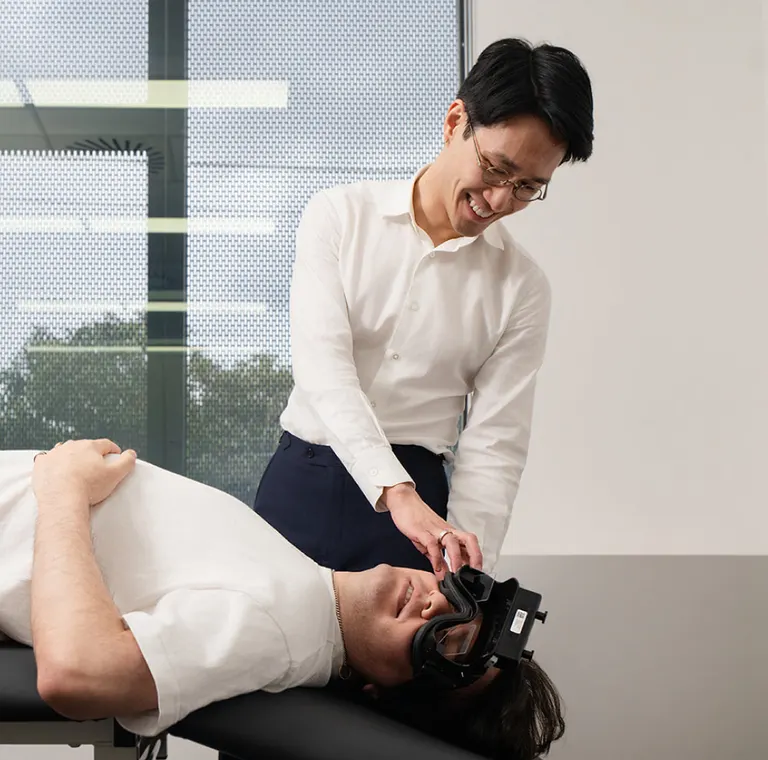
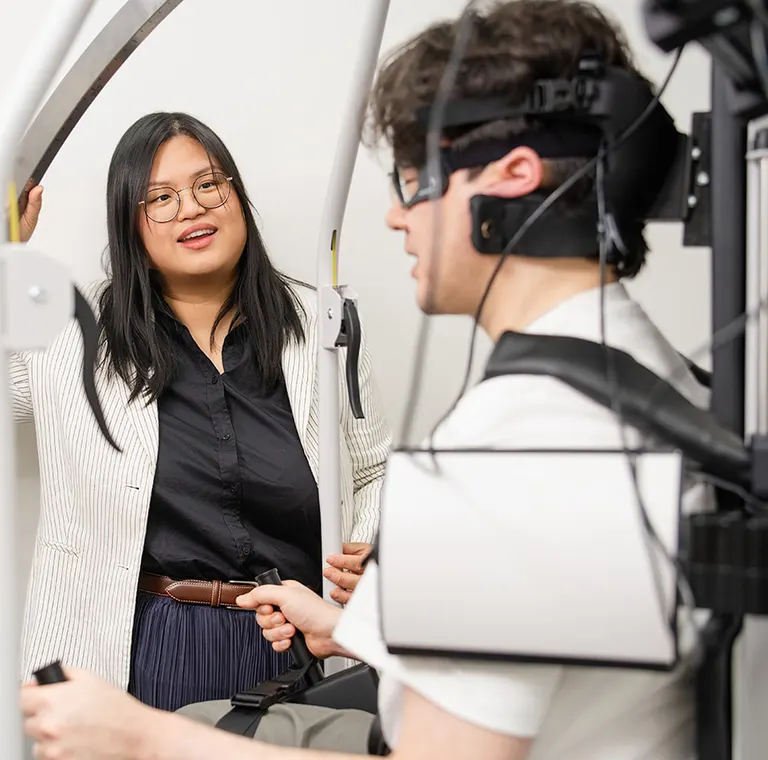
He has a keen interest in the use of mechanical rotation chairs (Rotundum repositioning chair). He was one of the first doctors trained in the use of the Rotundum chair and spent more than 3 years gaining experience with mechanical rotation devices at A/Prof Miriam Welgampola’s lab in Sydney. This provided the impetus for him to set up Melbourne Balance Clinic and continue his work with the second Rotundum device in the country to enable patients in Melbourne to access the same level of medically supervised treatment in a mechanical rotation device.
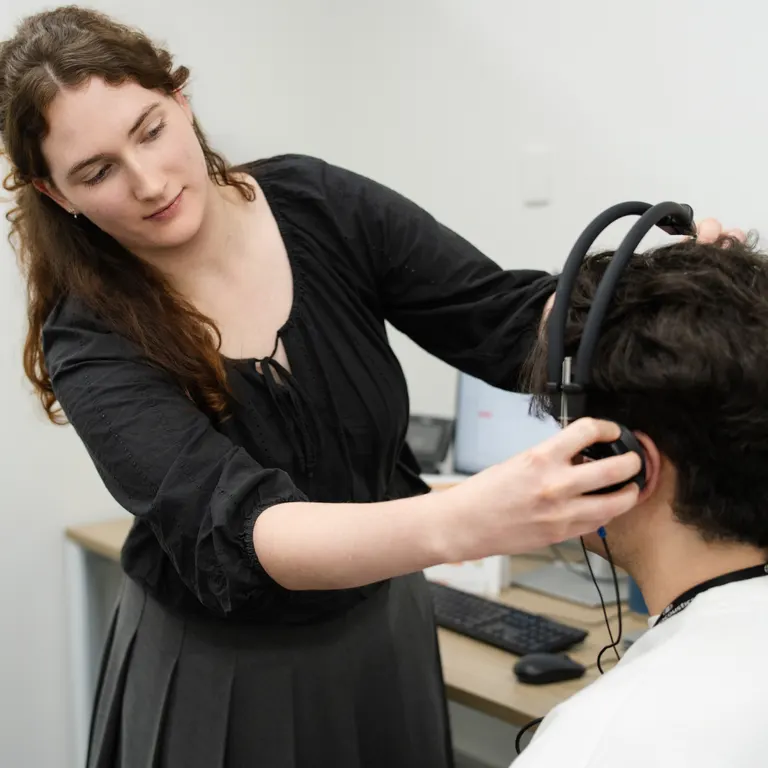
Nick’s subspecialty training in neurophysiology and neuro-otology uniquely positions him to understand and interpret studies such as VEMPs, which sit at the intersection of these two areas. He is accredited by ANZAN as a Level 2 EMG/NCS supervisor and has pursued further training through courses via the American Association of Neuromuscular & Electrodiagnostic Medicine.
He has presented at both national and international conferences. He is a regular presenter at the Neuro-otology Society of Australia (NOTSA) meeting and has presented his research at international conferences including the Bárány Society Meeting (2024) and the American Academy of Neurology Annual Meeting (2026), which are the two largest neuro-otology and general neurology conferences in the world, respectively.
Special Interests
- Positional vertigo and episodic positional vestibular disorders
- Neurophysiology of the vestibular system
- Artificial intelligence and its applications in clinical neuro-otology
- Ethical AI and implementation in healthcare
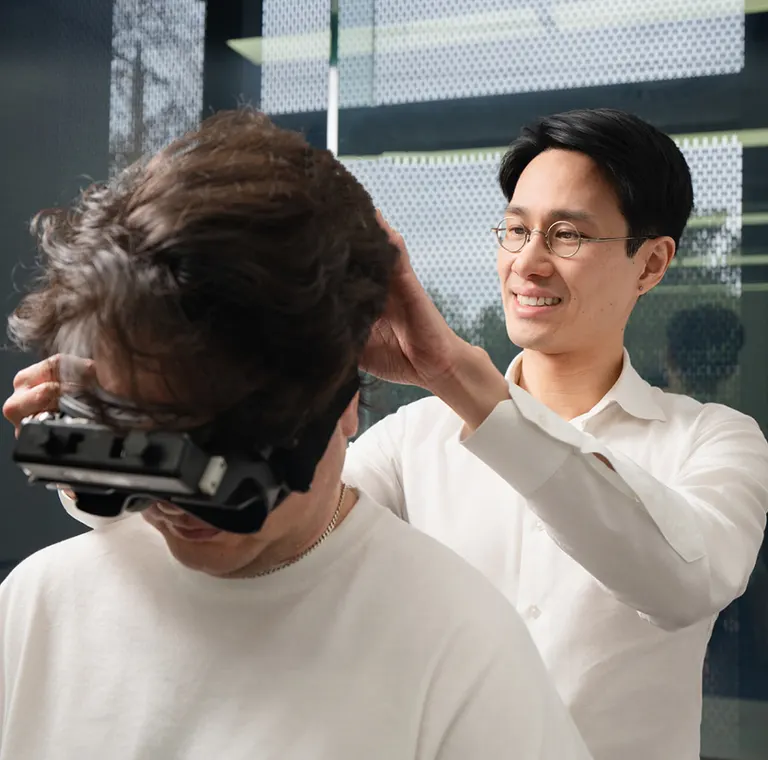
- The use of mechanical repositioning chairs in the management and diagnosis of positional vertigo
- Nystagmus analysis
Neurology & Neuro-Otology Training
- Neuro-Otology Fellow & PhD candidate – University of Sydney, 2023-Present
- Neurophysiology Fellow – Royal Hobart Hospital, 2022-2023
- Neurology Advanced Trainee – Alfred Health & Northern Health, 2021-2022
- Clinical Stroke Fellowship – St Vincent’s Hospital Melbourne, 2019-2020
Quality Improvement Projects
Dr Yang has co-authored a clinical guideline used at The Alfred Hospital, which guides the use of video-nystagmography in the Emergency Department. This was the first of its kind in Victoria and allowed patients presenting with vertigo to have their eye movements recorded for analysis by experts, which is a key diagnostic feature. This represented a significant advancement in the clinical assessment of patients presenting with vertigo to these emergency departments.
Experience In Numbers
- More than 3 years of experience treating patients in the Rotundum Chair
Awards & Career Achievements
- Research Scholarship – Passe & Williams Foundation, 2023-2026 – Awarded a research scholarship to undertake a PhD project under the supervision of A/Prof Miriam Welgampola and Dr Sally Rosengren looking at the application of machine learning to positional vertigo. Thesis titled ‘Recurrent Positional Vertigo: Separation of central and peripheral origins by nystagmus profile’. View here.
- Bond University – Dean’s List for Academic Excellence, 2014
IN THEIR OWN WORDS
Personal Q&As
Why did you choose this profession?
Neurology wasn’t so much a choice as a natural evolution that began when I first did a neurology rotation during my internship in Ballarat. The appeal stemmed from how satisfying it was to be able to reach a diagnosis through anatomical localisation based on clinical examination findings.
However, the choice to pursue further training in neuro-otology and neurophysiology was ultimately informed by my love of technology and getting to play with very expensive “toys”. My areas of subspecialty interest (neuro-otology and neurophysiology) are ultimately a manifestation of my inner child (and my love of computer games) being channelled into an academic pursuit.
What is your favourite procedure or service, and why?
Anything that involves cool devices… In particular, I enjoy working with the Rotundum chair and mechanical rotation chairs. This is due to the unique dichotomy of a mechanically complex device used to perform a very simple manoeuvre. This device represents the ingenuity of generations of scientists and clinicians who have created a sophisticated and elegant solution to a commonly experienced problem. The knowledge that enables us to provide these treatments spans the fields of neurology, physics, engineering and computer science and highlights the interdisciplinary nature of this work.
Can you name a person, teacher or mentor along the way that taught you something important about your given field?
The person who has had the most profound impact on my career would be A/Prof Miriam Welgampola, who I have the great honour of considering my mentor. She taught me not only the foundations of neuro-otology, but also provided me with the skills to enter academia and pursue my interests, while using that knowledge for the betterment of others.
Do you have a memorable patient story or work experience moment you can share?
One of the most satisfying experiences is being able to help a patient with positional vertigo and sometimes see a significant response in a matter of minutes! Treating patients with BPPV is always a favourite and the feeling of being able to successfully manage a condition with a series of movements will never get old.
What are some hobbies and interests outside of work that you enjoy?
I love cooking and baking, but I’ve been told that I am not allowed to buy single-use kitchen gadgets! I am always keen to hear about new ways I can use my sous vide or interesting fruits or vegetables you have found at the market recently. I also enjoy spending time with my husband and annoying my two adorable cats…
Book an Appointment with Melbourne Balance Clinic
If you are experiencing vertigo, dizziness or balance problems, Melbourne Balance Clinic can help identify the underlying cause and guide the right treatment plan.
Contact us today to arrange an appointment.