Introduction
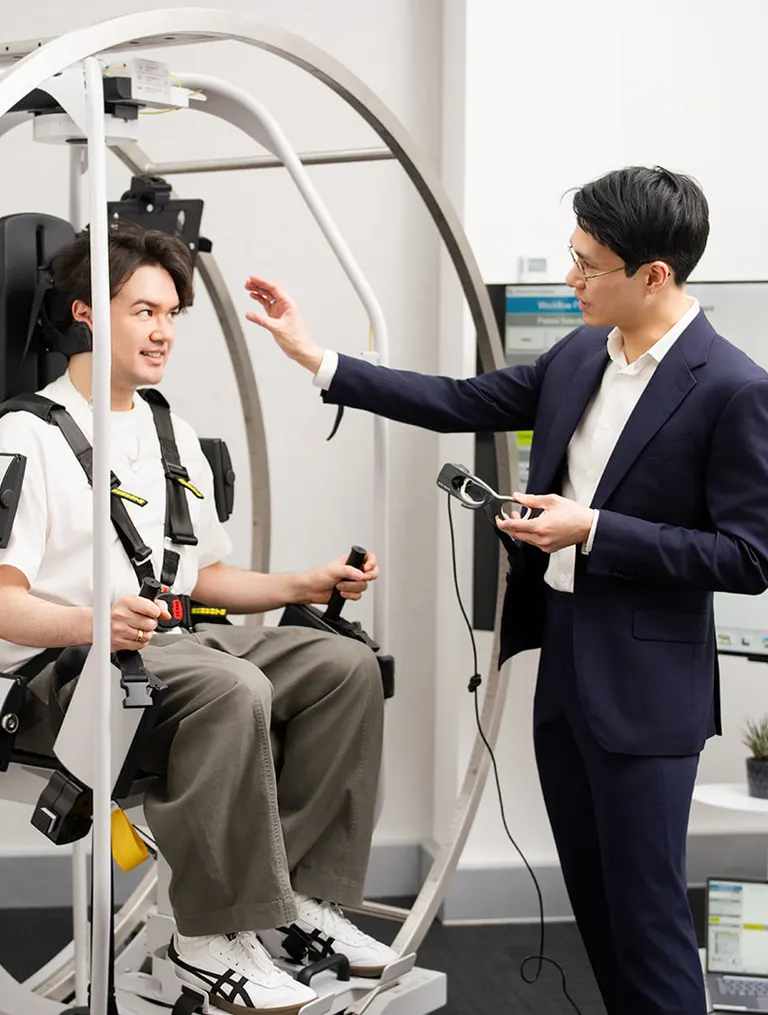
The Rotundum positioning chair is used to assist with the diagnosis and treatment of benign paroxysmal positional vertigo, commonly known as BPPV. BPPV is one of the most common causes of vertigo and often causes brief spinning dizziness when rolling over in bed, lying down, sitting up, looking up or bending forward.
For many people, BPPV can be diagnosed and treated using standard bedside positional tests and repositioning manoeuvres. However, some cases are more complex. Symptoms may be severe, recurrent, difficult to trigger during a standard appointment, or related to a less common inner ear canal.
Additionally, patients who have limited neck or back mobility may be unable to perform the usual bedside manoeuvres. The Rotundum Positioning Chair allows patients with these restrictions to receive appropriate repositioning therapy while minimising discomfort.
At Melbourne Balance Clinic, Rotundum positioning chair assessment may be used when more controlled positioning is needed. The aim is to identify the affected ear and canal more accurately, guide treatment and improve outcomes for patients with complex or difficult-to-treat positional vertigo.
What Is the Rotundum Positioning Chair?
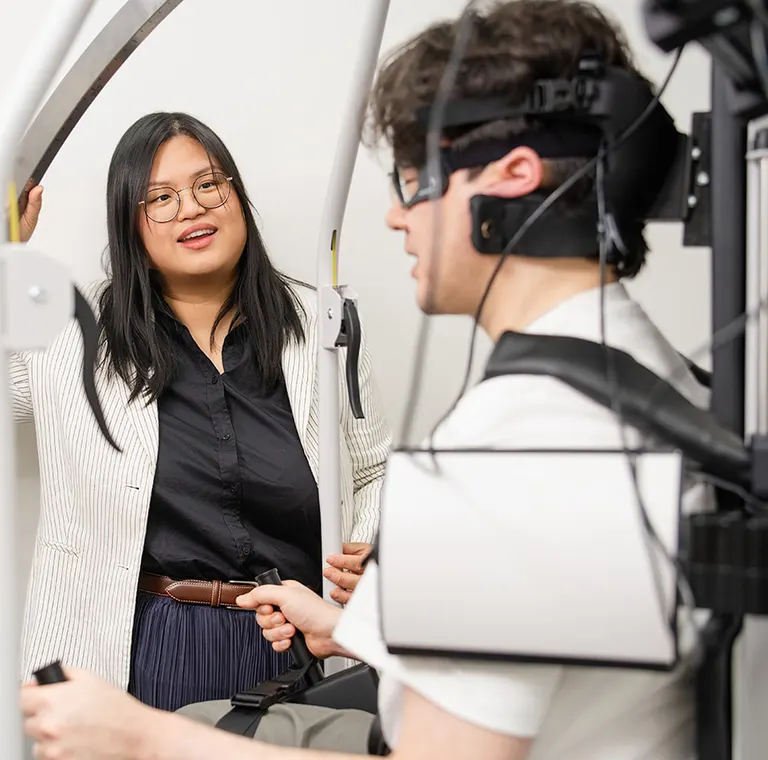
The Rotundum positioning chair is a specialised medical chair designed for BPPV diagnosis and treatment. It allows the patient to be moved through controlled positions while remaining supported in the chair. The device is specifically described as being designed for the diagnosis and treatment of BPPV.
This can be helpful because BPPV is a mechanical problem within the inner ear. Tiny calcium crystals, called otoconia, move into the wrong part of the inner ear balance system. When the head changes position, these crystals can shift and send the brain a false signal of movement, causing vertigo.
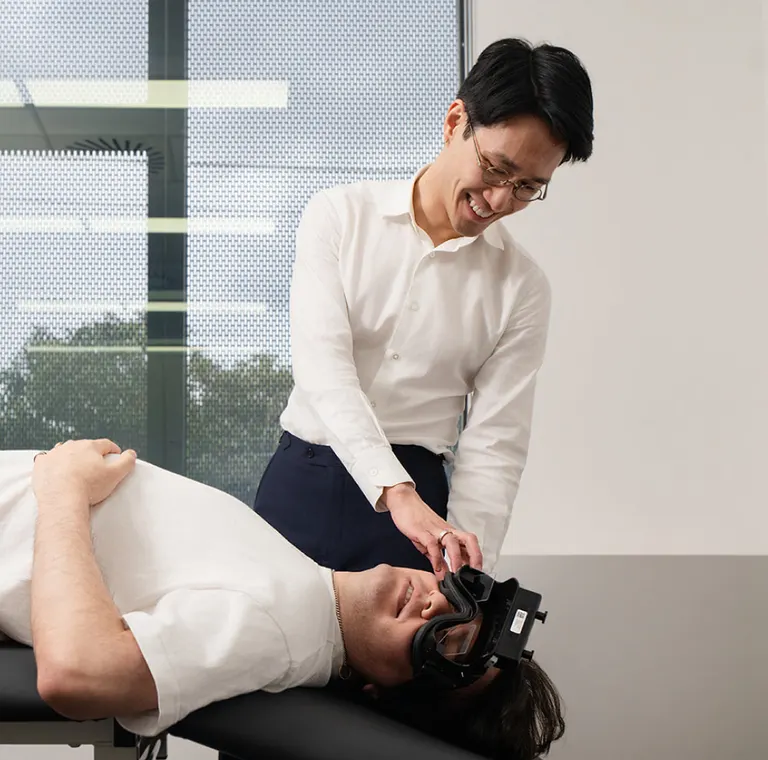
A positioning chair allows the clinician to move the patient into precise positions that may be difficult to achieve on a standard examination bed.
Why Might I Need Chair-Based Testing?
You may be considered for Rotundum positioning chair testing if your symptoms suggest BPPV but the diagnosis is not straightforward.
This may include situations where:
Symptoms keep returning despite previous treatment
Standard BPPV manoeuvres have not worked
Vertigo is severe or difficult to tolerate
Neck, back or mobility issues make standard testing difficult
More than one canal may be involved
The affected side or canal is unclear
The eye movement pattern is unusual
Symptoms suggest horizontal canal or multi-canal BPPV
Positional vertigo occurs but previous tests have been inconclusive
Not every patient with BPPV needs a positioning chair. Many people improve with standard repositioning manoeuvres. The chair is most useful when the case is complex, recurrent, atypical or physically difficult to assess using usual methods.
What Happens During Testing?
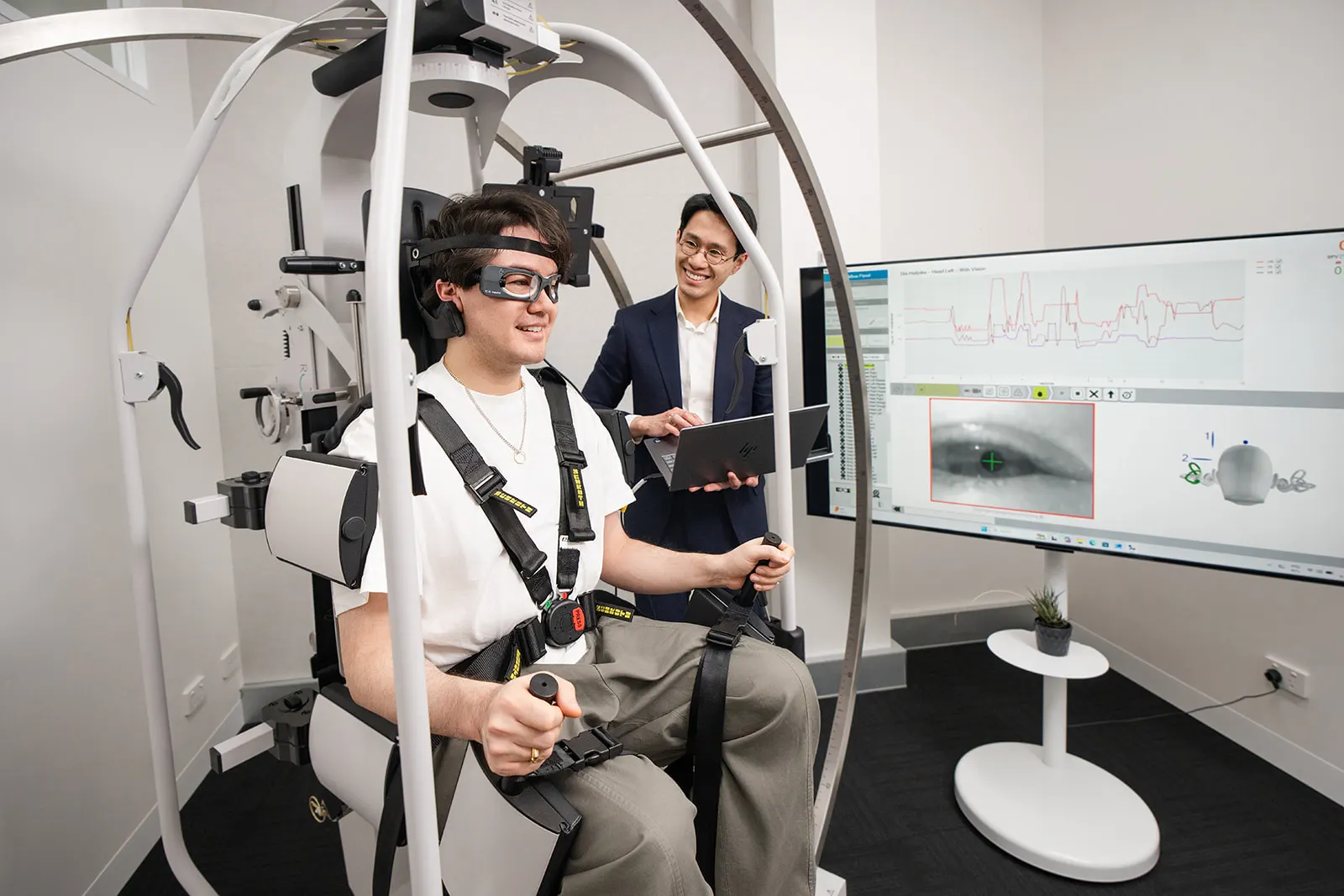
During the assessment, you are safely secured in the positioning chair. The clinician then moves the chair through specific positions designed to test the inner ear balance canals for evidence of displacement.
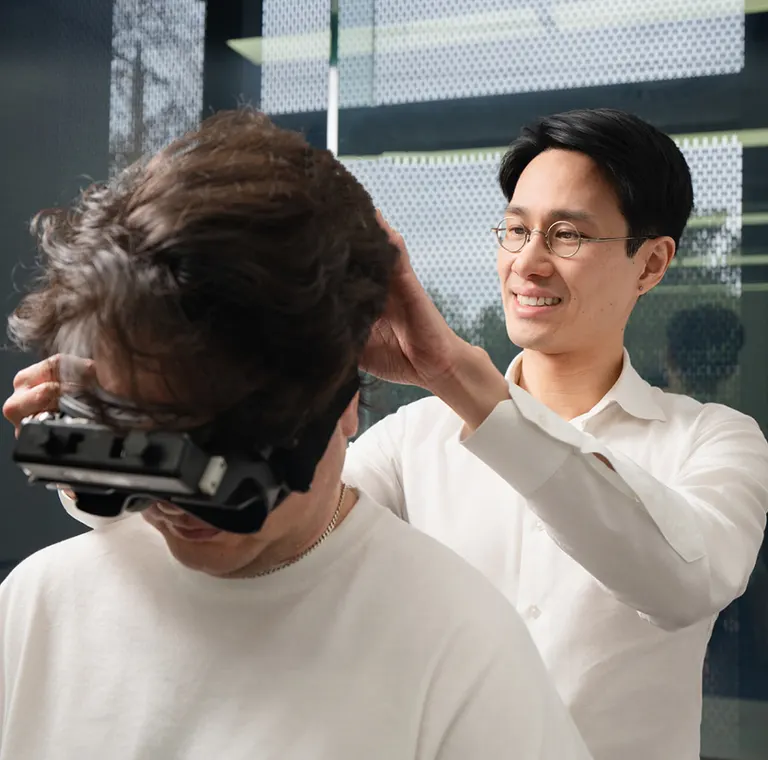
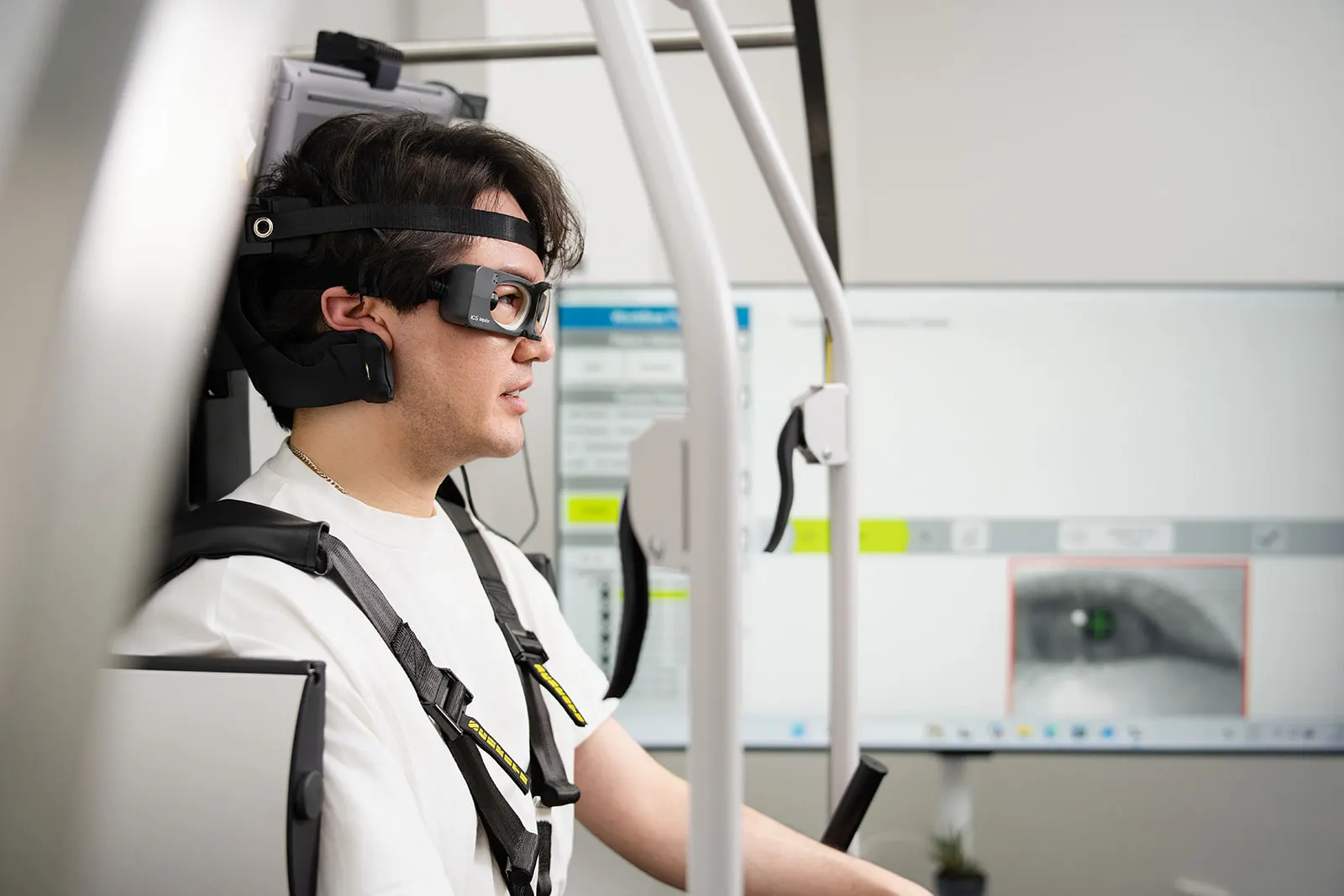
You may wear video goggles so your eye movements can be recorded. This is important because BPPV causes characteristic involuntary eye movements, known as nystagmus. The direction and timing of these eye movements help identify which ear and which canal are affected.
The test may briefly trigger vertigo. This can feel unpleasant, but it is also diagnostically useful. The goal is to reproduce the symptom safely and observe the eye movement pattern so treatment can be targeted correctly.
How Is Treatment Performed in the Chair?
If BPPV is identified, the chair can be used to perform repositioning treatment. This involves moving the head and body through a planned sequence of positions to guide the displaced crystals out of the affected canal and back towards the correct area of the inner ear.
This is the same general principle as standard BPPV treatments, such as the Epley manoeuvre, but performed in a more controlled and supported way.
Chair-based treatment may be useful when standard manoeuvres are difficult because of neck stiffness, back pain, reduced mobility, severe nausea, anxiety about movement or complex canal involvement.
Will the Chair Make Me Dizzy?
Yes, it may. Because the test is designed to trigger positional vertigo, you may feel spinning, nausea or imbalance during parts of the assessment.
These symptoms are usually temporary. The clinician will explain what is happening, monitor your response and allow time for symptoms to settle.
It may be sensible to have someone drive you home after the appointment, particularly if your vertigo is severe or if you usually feel unsteady after testing.
Is Rotundum Chair Testing Safe?
Rotundum chair testing is designed to support the patient during controlled positioning. However, it may not be suitable for everyone.
Before testing, we will consider factors such as neck problems, back problems, recent surgery, severe mobility limitations, cardiovascular issues, severe nausea, body weight/size, anxiety about testing and general medical fitness.
You should tell us before the appointment if you have significant neck or spine problems, recent surgery, a history of fainting, severe motion sickness, or any condition that may affect your ability to tolerate positioning.
How Should I Prepare?
We will provide specific instructions before your appointment.
You may be asked to avoid certain dizziness, nausea or sedating medications before testing, as these can affect eye movement responses. Do not stop prescribed medication unless you have been specifically instructed to do so.
It is helpful to bring previous vestibular test results, hearing tests, imaging reports, referral letters and a list of medications.
Please refrain from eating and drinking at least 2 hours before your appointment.
Try to note your symptom pattern before the appointment. Important details include which movements trigger vertigo, how long the spinning lasts, whether one side is worse, whether symptoms occur in bed, and whether you have hearing symptoms, migraine symptoms or ongoing imbalance.
What Conditions Can Chair Testing Help With?
Rotundum positioning chair testing is mainly used for BPPV and complex positional vertigo.
It may help assess posterior canal BPPV, horizontal canal BPPV, anterior canal BPPV, multi-canal BPPV, recurrent BPPV and atypical positional nystagmus/vertigo.
BPPV is the most common cause of vertigo. Because BPPV is often treatable, accurate diagnosis of the affected canal is important.
Why Choose Melbourne Balance Clinic?
Melbourne Balance Clinic provides Rotundum positioning chair testing and treatment within a specialist balance and dizziness service.
This matters because positional vertigo is not always simple BPPV. Some patients have vestibular migraine, Ménière’s disease, vestibular neuritis, PPPD or neurological causes that can overlap with or mimic BPPV.
Our approach is to assess the full symptom pattern, identify whether BPPV is truly present, determine which canal is involved, and provide treatment that is matched to the diagnosis.
Book an Appointment for Rotundum Positioning Chair Testing in Melbourne
If you have recurrent, severe or difficult-to-treat positional vertigo, Rotundum positioning chair assessment may help clarify the diagnosis and guide treatment.
Contact Melbourne Balance Clinic to arrange an appointment for specialist BPPV assessment, positioning chair testing and treatment in Melbourne.
Last reviewed October 2026
Sources4 references
- West, N., Hansen, S., Møller, M.N., Bloch, S.L., Klokker, M., 2016. Repositioning chairs in benign paroxysmal positional vertigo: implications and clinical outcome. Eur Arch Otorhinolaryngol 273, 573–580. https://doi.org/10.1007/s00405-015-3583-z
- Marques, P.S., Castillo, R., Santos, M., Perez-Fernandez, N., 2014. Repositioning nystagmus: prognostic usefulness? Acta Oto-Laryngologica 134, 491–496. https://doi.org/10.3109/00016489.2013.872291
- Bech, M.W., Staffe, A.T., Hougaard, D.D., 2023. A mechanical rotation chair provides superior diagnostics of benign paroxysmal positional vertigo. Front. Neurol. 14. https://doi.org/10.3389/fneur.2023.1040701
- Hougaard, D.D., Vorm, B., Skals, R.G., Holm, J., Thrane, J.F., Lüscher, M., 2026. A mechanical rotation chair provides superior diagnostics of Benign Paroxysmal Positional Vertigo amongst elderly. Front. Neurol. 17. https://doi.org/10.3389/fneur.2026.1873559