Introduction
Inherited balance disorders are conditions where dizziness, imbalance, unsteadiness or poor coordination are partly or mainly caused by genetic factors. Some inherited balance disorders begin in childhood or early adulthood. Others develop later in life and may not be recognised until symptoms gradually become more obvious.
These conditions can affect different parts of the balance system, including the inner ear vestibular organs, vestibular nerves, cerebellum, peripheral nerves, eyes, muscles or the pathways that coordinate movement.
For some people, the main symptom is unsteadiness when walking. Others notice clumsiness, falls, difficulty walking in the dark, blurred or bouncing vision during movement, numbness in the feet, poor coordination, dizziness, vertigo or a long history of motion sensitivity.
At Melbourne Balance Clinic, we assess inherited and complex balance disorders as part of a focused service for vertigo, dizziness and balance problems. Our aim is to identify the pattern of symptoms, arrange appropriate testing where needed, and guide patients towards a clearer diagnosis and practical management plan.
What Are Inherited Balance Disorders?
Inherited balance disorders are conditions passed through families or caused by genetic changes that affect balance, coordination or movement control.
Some conditions primarily affect the vestibular system of the inner ear. Others affect the cerebellum, which is the part of the brain that helps coordinate movement and balance. Some affect the peripheral nerves, reducing sensation from the feet and legs. Many inherited balance disorders affect more than one system at the same time.
This means the symptoms can be broad. A person may not simply feel “dizzy”. They may feel unsteady, poorly coordinated, visually unstable, clumsy, weak, numb in the feet, or unable to walk confidently in the dark.
In some families, several relatives may have similar balance, walking, coordination or hearing problems. In other cases, the person is the first in the family to be diagnosed.
What Symptoms Can Inherited Balance Disorders Cause?
Symptoms vary depending on which part of the balance system is affected.
Common symptoms include:
Unsteadiness when walking or standing
Falls or near-falls
Difficulty walking in the dark or on uneven ground
Poor coordination or clumsiness
Bouncing or blurred vision when walking
Dizziness or motion sensitivity
Vertigo in some conditions
Numbness, tingling or reduced sensation in the feet
Difficulty with fine motor tasks
Slurred speech in some cerebellar disorders
Hearing loss, tinnitus or ear symptoms in selected conditions
Symptoms that slowly progress over time
Similar symptoms in other family members
Some inherited balance disorders are slowly progressive. Symptoms may be mild at first and mistaken for poor fitness, ageing, anxiety, low blood pressure, inner ear vertigo or a previous injury. Over time, the pattern may become clearer.
Why Can Genetic Balance Disorders Be Hard to Diagnose?
Inherited balance disorders can be difficult to diagnose because symptoms often develop gradually and overlap with more common conditions.
A person with unsteadiness may be told they have vertigo, ageing-related balance loss, anxiety or neuropathy. Another person may have repeated normal scans but continue to feel unsteady. Some patients see several clinicians before the possibility of an inherited disorder is considered.
The diagnosis can also be difficult because inherited balance disorders do not all look the same. Some mainly affect walking and coordination. Others affect vision stability, sensation in the feet, hearing or eye movements. Some have obvious family history, while others do not.
A careful assessment looks for patterns. These may include slow progression, imbalance worse in the dark, abnormal eye movements, reduced reflexes, sensory loss, cerebellar signs, bilateral vestibular loss, unexplained neuropathy, or a family history of similar symptoms.
How Can the Inner Ear Be Involved?
The vestibular system of the inner ear helps stabilise vision and balance when the head moves. If vestibular function is reduced on both sides, a person may develop progressive and chronic imbalance.
This can cause difficulty walking, sometimes worse in the dark, unsteadiness on uneven ground and blurred or bouncing vision during head movement. The person may feel relatively comfortable when sitting still, but become unsteady when walking, turning quickly or moving through visually complex environments.
In inherited balance disorders, vestibular loss may occur together with cerebellar or nerve problems. This combination can make balance more difficult because several stabilising systems are affected at once.
How Can the Cerebellum Be Involved?
The cerebellum is important for coordination, posture, walking, balance and smooth control of movement of the trunk and the limbs. Inherited conditions affecting the cerebellum are often called hereditary ataxias or spinocerebellar ataxias (SCAs). There are more than 40 different SCAs identified to date, with more being discovered over time.
When the cerebellum is involved, symptoms may include unsteady walking, poor coordination, clumsiness, tremor, slurred speech, abnormal eye movements or difficulty with fine motor control.
Cerebellar balance problems may be mistaken for vestibular dizziness or coexist with it, especially in the early stages. A neurological examination can help identify whether the pattern suggests cerebellar involvement.
How Can the Nerves in the Feet Be Involved?
The nerves in the feet and legs provide important information to the brain about body position and contact with the ground. The sense of where your limbs are is called proprioception.
If these nerves are affected by an inherited or acquired disorder, the brain receives less reliable balance information from the lower limbs. This can cause unsteadiness, especially in the dark or on uneven surfaces.
Some people notice numbness, tingling, burning, increased sensitivity to pain or difficulty knowing where their feet are. Others mainly notice that they need to look at the ground when walking.
When neuropathy occurs together with vestibular loss or cerebellar involvement, balance can be significantly affected.
Are Inherited Balance Disorders Common?
Inherited balance disorders are generally uncommon compared with BPPV and vestibular migraine. However, they are important because they can be missed, may progress over time, and sometimes have implications for family members.
The Australian Institute of Health and Welfare reports that about 2.2 million Australians were living with long-term neurological conditions in 2022, and neurological conditions accounted for 8.4% of Australia’s total disease burden in 2024. This figure includes many neurological conditions, not only inherited balance disorders, but it highlights the broader impact of neurological disease in the community.
Because inherited balance disorders are individually rare, Australian population-level statistics for many specific conditions are limited. For patients, the more important question is whether their symptom pattern suggests a genetic or neurological balance disorder that needs further assessment and referral for special genetic testing.
When Should an Inherited Balance Disorder Be Considered?
An inherited balance disorder may be worth considering when imbalance is progressive, unexplained or associated with neurological features.
Clues may include:
Gradually worsening balance over years with no other cause found
Similar symptoms in a parent, sibling or other relative
Difficulty walking in the dark or on uneven ground
Bouncing vision during movement
Numbness or reduced sensation in the feet
Poor coordination, clumsiness or tremor
Slurred speech or swallowing difficulty
Abnormal eye movements
Bilateral vestibular loss
Unexplained neuropathy
Balance symptoms beginning at a younger age than expected
These symptoms do not automatically mean you have an inherited disorder. They simply indicate that a more detailed vestibular and neurological assessment may be appropriate.
How Are Inherited Balance Disorders Diagnosed?
Diagnosis begins with a detailed history and examination. Your doctor will ask about your symptoms, when they began, whether they are changing, what makes them worse, whether there are falls, whether you have hearing or visual symptoms, and whether any family members have similar issues.
The examination may assess eye movements, coordination, walking, reflexes, sensation in the feet, strength, balance and neurological function.
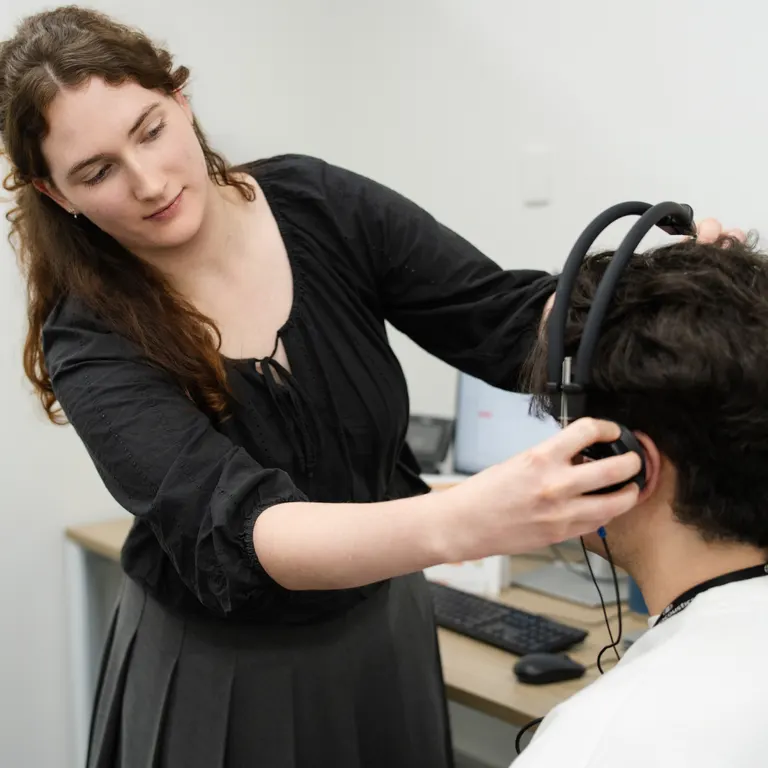
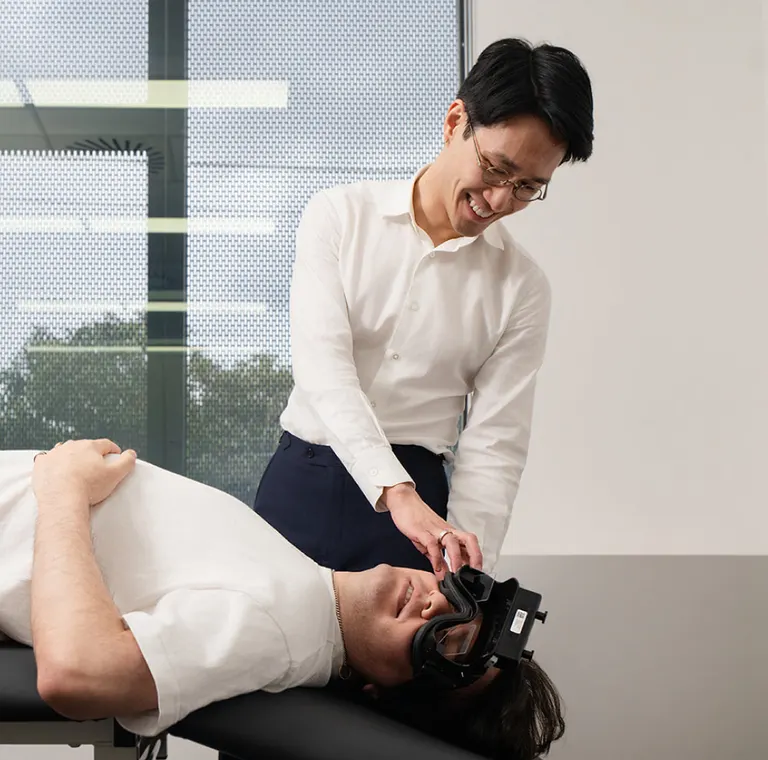
Testing may include vestibular function testing to assess inner ear balance function, nerve conduction studies or EMG to assess peripheral nerve function, hearing tests, imaging such as MRI, blood tests or genetic testing in selected patients.
Genetic testing is usually considered when the clinical pattern suggests a specific inherited condition or group of conditions. It may also involve genetic counselling, particularly where results could have implications for family members.
What Tests Might I Need?
The tests recommended will depend on the suspected pattern.
Vestibular function testing can help determine whether one or both inner ear balance systems are reduced.
Nerve conduction studies and EMG can help assess whether peripheral neuropathy or sensory neuronopathy is contributing to imbalance.
MRI may be used to assess the cerebellum, brainstem or other neurological structures.
Hearing tests may be useful if hearing loss, tinnitus or ear pressure are present.
Genetic testing may be recommended if the history, examination and test results suggest an inherited balance disorder.
The purpose of testing is to build a coherent picture. In complex balance disorders, no single test tells the whole story.
Can Inherited Balance Disorders Be Treated?
Treatment depends on the diagnosis. Some inherited balance disorders do not currently have a cure, but treatment can still help improve safety, function, confidence and quality of life.
Management may include vestibular rehabilitation, balance and strength training, falls prevention, walking aids where appropriate, occupational therapy, medication review, hearing support, treatment of associated symptoms, and monitoring over time.
If a specific genetic diagnosis is made, it may help guide prognosis, family counselling, future planning and access to specialist neurological care or research opportunities.
The goal is not only to name the condition. It is to understand what is contributing to imbalance and create a plan that helps the person stay as active, safe and independent as possible.
Why Choose Melbourne Balance Clinic?
Melbourne Balance Clinic provides specialist assessment for complex balance disorders, including inherited conditions affecting the vestibular system, cerebellum and peripheral nerves.
Our approach considers the whole balance system rather than focusing only on one symptom. We assess vestibular function, neurological signs, walking, sensory function, family history and possible overlapping conditions.
We can provide vestibular testing and nerve conduction studies, as well as referrals for appropriate imaging, all in one location.
This is important because inherited balance disorders may be subtle, progressive and difficult to recognise. A detailed balance clinic assessment can help identify whether symptoms are due to an inner ear disorder, neurological condition, neuropathy, genetic syndrome or a combination of factors.
Where appropriate, we can coordinate care with your GP, genetic services, vestibular physiotherapist, audiologist or other treating clinicians.
When Should I Book an Appointment?
You should consider booking an appointment if you have unexplained or progressive imbalance, difficulty walking in the dark, falls, bouncing vision during movement, reduced sensation in the feet, poor coordination or a family history of similar balance problems.
You may also benefit from assessment if you have been diagnosed with bilateral vestibulopathy, neuropathy, ataxia or an inherited neurological condition and need a clearer understanding of how this is affecting your balance.
Book an Appointment for Inherited Balance Disorders in Melbourne
Inherited balance disorders can be complex, but a clear diagnosis and structured management plan can make a meaningful difference.
Melbourne Balance Clinic provides specialist assessment for inherited balance disorders, progressive imbalance, bilateral vestibular loss, ataxia, neuropathy and complex vestibular conditions.
Contact Melbourne Balance Clinic to arrange an appointment and take the next step towards understanding your balance symptoms and improving your confidence.
Last reviewed October 2026
Sources3 references
- National Library of Medicine; GeneReviews®: https://www.ncbi.nlm.nih.gov/books/NBK564656
- Australian Institute of Health and Welfare (AIHW); Neurological conditions in Australia: https://www.aihw.gov.au/reports/neurological-conditions/neurological-conditions/contents/summary
- Bhandari, J., Thada, P.K., Samanta, D., 2026. Spinocerebellar Ataxia, in: StatPearls. StatPearls Publishing, Treasure Island (FL).