Introduction
Ménière’s disease is an inner ear disorder that can cause repeated attacks of vertigo, fluctuating hearing loss, tinnitus and pressure or fullness in the ear. Attacks can be unpredictable and disruptive, sometimes making it difficult to work, drive, travel, exercise or plan normal daily activities.
For some people, Ménière’s disease begins with occasional episodes of spinning vertigo. For others, the first noticeable symptom may be a blocked or full feeling in one ear, fluctuating hearing, ringing in the ear, or nausea during attacks.
Because Ménière’s disease can resemble other causes of vertigo, including vestibular migraine and other inner ear disorders, careful assessment is important. At Melbourne Balance Clinic, we assess Ménière’s disease as part of a focused evaluation of vertigo, dizziness, hearing-related symptoms and balance disorders.
Our aim is to clarify the diagnosis, understand how the condition is affecting you, and develop a practical and evidence-based management plan.
What Is Ménière’s Disease?
Ménière’s disease is a disorder of the inner ear. It affects both hearing and balance because the inner ear contains the cochlea, which is involved in hearing, and the vestibular organs, which are involved in balance.
The condition is thought to be associated with abnormal fluid regulation in the inner ear, sometimes called endolymphatic hydrops. This can interfere with the normal function of the hearing and balance organs.
Ménière’s disease affects the inner ear and causes attacks of vertigo and hearing loss that may get worse over time. Studies report vertigo in Ménière’s disease typically lasts from 20 minutes to hours, often with nausea, vomiting and unsteadiness.
Ménière’s disease usually affects one ear, although some people can develop symptoms in both ears over time.
What Are the Symptoms of Ménière’s Disease?
Ménière’s disease can vary from person to person. Some people have infrequent attacks, while others have clusters of attacks that significantly affect quality of life.
Common symptoms include:
Vertigo, often described as a spinning sensation
Hearing loss, which may fluctuate, especially in the earlier stages
Tinnitus, such as ringing, buzzing, roaring or humming in the ear
Ear fullness, pressure or a blocked sensation
Nausea or vomiting during vertigo attacks
Unsteadiness or fatigue after an attack
Anxiety about when the next attack may occur
The combination of vertigo with hearing symptoms is an important clue. A person with vestibular migraine may have spontaneous episodes of spinning vertigo, but vestibular migraine typically does not cause single-sided fluctuating hearing loss, tinnitus or ear pressure.
What Does a Ménière’s Attack Feel Like?
A Ménière’s attack can be intense. The vertigo often comes on suddenly and may feel as though the room is spinning or the body is being pulled or thrown off balance. Nausea, vomiting, sweating and the need to lie still are common.
Some people notice warning symptoms before an attack, such as increasing ear pressure, louder tinnitus or a change in hearing. Others have little warning.
After an attack, it is common to feel drained, foggy, unsteady or washed out. This recovery phase can last hours or longer, even after the spinning has settled.
The unpredictability of attacks is one reason Ménière’s disease can be so distressing. Patients may begin avoiding driving, meetings, exercise, social activities or travel because they are worried an attack may happen without warning.
Why Does Ménière’s Disease Happen?
The exact cause of Ménière’s disease is not fully understood.
Several factors may contribute, including genetic susceptibility, immune system factors, viral triggers, migraine biology, inflammation or differences in inner ear fluid regulation. To date, there is no single diagnostic test that confirms Ménière’s disease.
This uncertainty can be frustrating, but treatment can still be effective. The aim is to reduce the frequency and severity of attacks, provide an appropriate action plan and manage the effects of damage to the inner ear hearing and balance function.
How Common Is Ménière’s Disease?
Ménière’s disease is much less common than BPPV or migraine-related dizziness. However, it is an important diagnosis because it can affect both balance and hearing over time.
Reliable Australian population-level prevalence data specifically for Ménière’s disease is limited. However, global studies demonstrate a prevalence of 70 to 513 per 100,000. This can vary significantly based on ethnic background with a higher incidence in people of European ethnic descent and a lower incidence in people of Asian and African ethnic descent.
There are also more recently identified genetic mutations which predispose individuals from some families to develop Ménière’s disease.
How Is Ménière’s Disease Diagnosed?
Ménière’s disease is diagnosed through a combination of history, examination and hearing or vestibular testing. There is no single simple test that confirms every case.
Your doctor will ask about the pattern of vertigo attacks, how long they last, whether hearing changes fluctuate, whether tinnitus or ear pressure occurs, and whether one or both ears are affected.
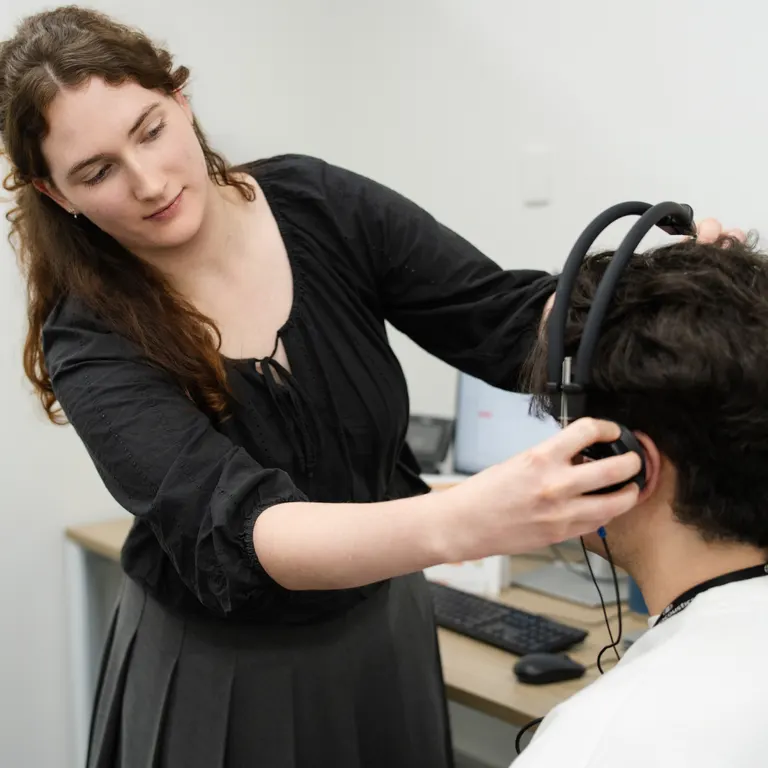
Hearing assessment is often important. Ménière’s disease commonly affects low-frequency hearing in the earlier stages, although the pattern can change over time.
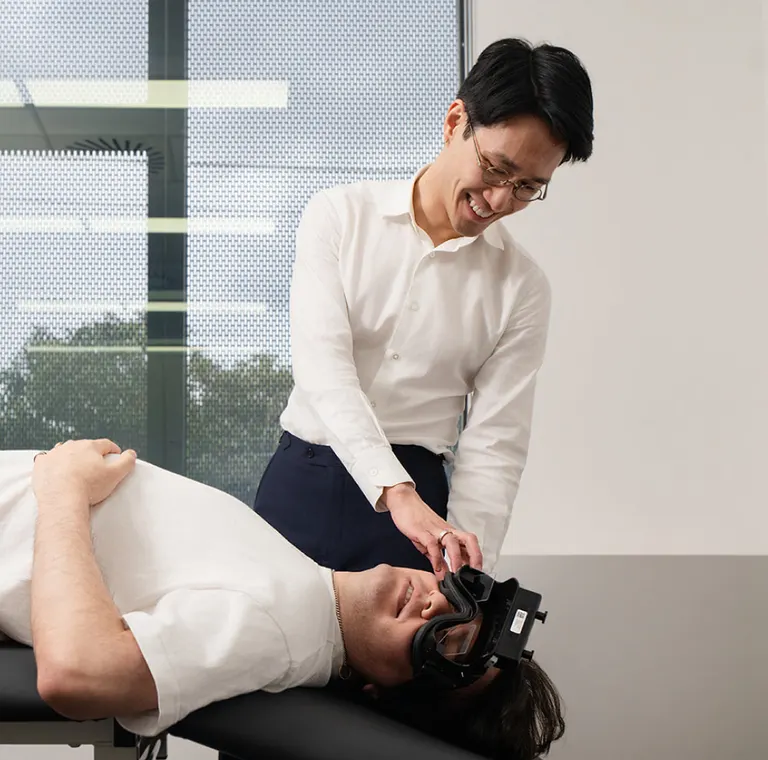
Vestibular testing may be recommended to assess how the inner ear balance system is functioning. This can help determine whether one side is weaker, whether there are signs of another vestibular disorder, and whether the findings fit the suspected diagnosis.
Sometimes imaging may be needed to exclude other causes of one-sided hearing symptoms or vertigo. Blood tests or other investigations may also be considered depending on the overall clinical picture.
What Other Conditions Can Look Like Ménière’s Disease?
Ménière’s disease can overlap with, or be mistaken for, several other conditions. This is one reason specialist assessment can be helpful.
Vestibular migraine is one of the most common conditions that can resemble Ménière’s disease. It can cause vertigo, nausea, motion sensitivity, sound sensitivity and ear pressure. Some people with vestibular migraine also report tinnitus. However, vestibular migraine does not usually cause the same pattern of fluctuating or progressive hearing loss.
BPPV can cause spinning vertigo with head position changes, but attacks usually last seconds and are not typically associated with hearing loss or ear fullness.
Vestibular neuritis can cause sudden vertigo lasting days, but it usually does not cause repeated attacks with fluctuating hearing symptoms.
Other causes, including autoimmune inner ear disease, vestibular schwannoma, sudden sensorineural hearing loss, neurological disease and medication-related dizziness, may also need to be considered depending on the symptoms.
Can Ménière’s Disease Be Treated?
Yes. Ménière’s disease is usually managed rather than “cured”, but many people can reduce attacks and improve quality of life with the right plan.
Treatment may include lifestyle strategies, dietary changes, medication, hearing management, vestibular rehabilitation and, in more severe cases, specialist procedures performed by skilled ENT surgeons.
Some patients are advised to reduce salt intake, moderate caffeine or alcohol, improve sleep, manage stress and maintain hydration. These strategies are often used to reduce inner ear fluid fluctuation, although the benefit varies between individuals.
Medication may be used to reduce nausea or vertigo during attacks. Some patients may be offered preventive medication or diuretics, depending on their symptoms and treating doctor’s assessment.
If hearing loss or tinnitus is significant, audiology assessment and hearing support may be important. Managing the hearing component of Ménière’s disease is a key part of care, not an afterthought.
Vestibular rehabilitation may help if there is ongoing imbalance between attacks, although it is usually tailored carefully because symptoms can fluctuate.
What Happens If Symptoms Are Severe or Ongoing?
Most patients begin with conservative management, but some people have frequent, severe or disabling attacks despite initial treatment.
In more difficult cases, referral to an ENT specialist service may be appropriate. Treatment options can include middle ear injections or surgical procedures in selected patients. These options need careful discussion because some treatments aim to control vertigo by reducing inner ear balance function, which may have implications for hearing and balance.
The right approach depends on the severity of attacks, hearing level, whether one or both ears are affected, age, falls risk and overall health.
Melbourne Balance Clinic can help clarify the diagnosis, assess vestibular function and coordinate care where more advanced management is required.
Can Ménière’s Disease Affect Balance Between Attacks?
Yes. Although Ménière’s disease is often described as an episodic condition, some people feel unsteady between attacks.
This may occur because the affected inner ear is not sending stable balance signals, because the brain has not fully compensated, or because the person has become cautious with movement after repeated vertigo episodes.
Some people also develop persistent dizziness or motion sensitivity, particularly if Ménière’s disease overlaps with vestibular migraine or PPPD.
If you feel unsteady between attacks, it is worth discussing this during your appointment. Treatment should focus not only on vertigo attacks, but also on day-to-day function and confidence.
What Should I Do During an Attack?
During a Ménière’s attack, it is usually safest to stop what you are doing, sit or lie down, keep the head as still as possible, and avoid driving or operating machinery.
Some people are prescribed medication to use during attacks to reduce nausea or vertigo. It can also help to have a practical plan for work, transport, family responsibilities and safety, especially if attacks are unpredictable.
If symptoms are different from usual, unusually severe, associated with new neurological symptoms, or include sudden hearing loss, urgent medical assessment may be needed.
When Should Ménière’s Symptoms Be Assessed Urgently?
Ménière’s disease can be distressing, but not all vertigo in a person with Ménière’s disease should automatically be assumed to be another Ménière’s attack. New or unusual symptoms should be assessed carefully.
Why Choose Melbourne Balance Clinic?
Melbourne Balance Clinic provides specialist assessment for vertigo, dizziness and balance disorders, including Ménière’s disease and conditions that can resemble it.
Our approach considers both the balance and hearing aspects of the condition. We assess the pattern of attacks, associated ear symptoms, vestibular function, migraine features and possible overlapping diagnoses.
This is important because Ménière’s disease can be difficult to distinguish from vestibular migraine, recurrent vestibular disorders and other inner ear conditions. A clear diagnosis helps guide the right treatment and avoids unnecessary or ineffective management.
The aim is to provide a practical plan that helps reduce attacks, manage hearing-related symptoms, improve balance confidence and coordinate care where needed.
When Should I Book an Appointment?
You should consider booking an appointment if you experience recurrent vertigo with tinnitus, fluctuating hearing loss, ear fullness or pressure in one ear.
You may also benefit from assessment if you have been told you have Ménière’s disease but your symptoms remain difficult to control, if the diagnosis is uncertain, or if you also experience migraine symptoms, persistent dizziness or imbalance between attacks.
Book an Appointment for Ménière’s Disease in Melbourne
Ménière’s disease can be unpredictable and disruptive, but a clear diagnosis and structured management plan can make a meaningful difference.
Melbourne Balance Clinic provides specialist assessment for Ménière’s disease, vertigo, dizziness, tinnitus, hearing-related balance symptoms and complex vestibular disorders.
Contact Melbourne Balance Clinic to arrange an appointment and take the next step towards understanding and managing your symptoms.
Last reviewed October 2026
Sources6 references
- Healthdirect; Meniere's disease: https://www.healthdirect.gov.au/menieres-disease
- Better Health Channel; Ears - Meniere's disease: https://www.betterhealth.vic.gov.au/health/conditionsandtreatments/ears-menieres-disease
- Australian Parliament House: https://www.aph.gov.au/Parliamentary_Business/Committees/Senate/Education_and_Employment/CasualConversion/Report/Section?id=committees%2Freportrep%2F024048%2F24421
- Lopez-Escamez, J.A., Carey, J., Chung, W.-H., Goebel, J.A., Magnusson, M., Mandalà, M., Newman-Toker, D.E., Strupp, M., Suzuki, M., Trabalzini, F., Bisdorff, A., 2015. Diagnostic criteria for Menière’s disease. Journal of Vestibular Research 25, 1–7. https://doi.org/10.3233/VES-150549
- Pyykkö, I., Zou, J., Vetkas, N., 2024. Changes in symptom pattern in Meniere’s disease by duration: the need for comprehensive management. Front. Neurol. 15. https://doi.org/10.3389/fneur.2024.1496384
- Lopez-Escamez JA, Liu Y (2024) Epidemiology and genetics of Meniere’s disease. Current Opinion in Neurology 37:88–94. https://doi.org/10.1097/WCO.0000000000001227