Introduction
Benign paroxysmal positional vertigo, commonly called BPPV, is one of the most common causes of vertigo. It usually causes brief but intense episodes of spinning dizziness when the head moves into certain positions.
People with BPPV often feel vertigo when rolling over in bed, lying down, sitting up, looking up, bending forward or turning the head quickly. The spinning usually lasts seconds to minutes, but it can be very unpleasant. Some people also feel nauseated, unsteady or “not quite right” for hours after the spinning settles.
Although BPPV is usually not dangerous, it can be extremely disruptive. It can affect sleep, confidence, driving, work, exercise and the ability to move normally. In older adults, BPPV can also increase the risk of falls.
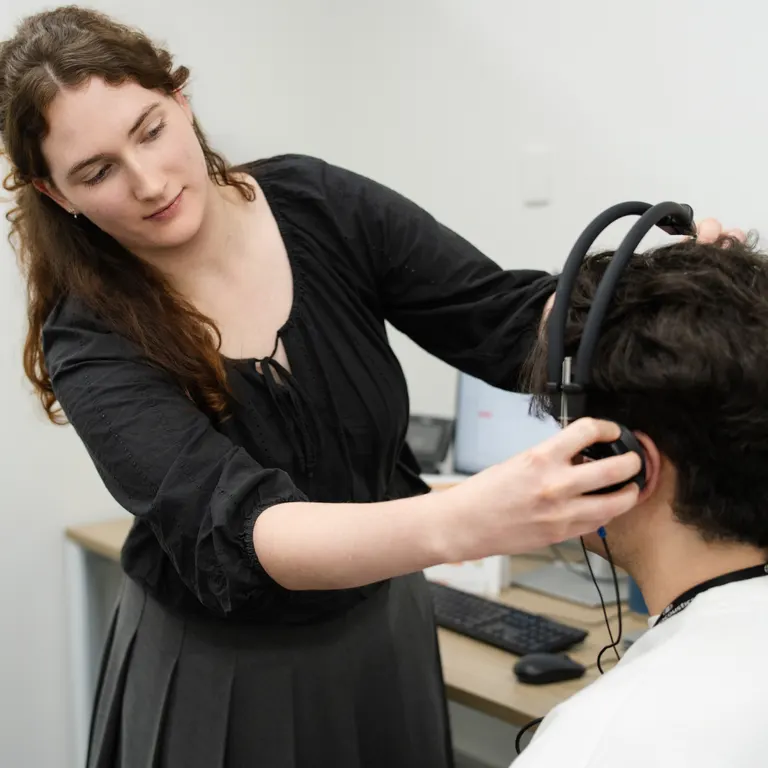
At Melbourne Balance Clinic, we assess and treat BPPV as part of a focused balance and vestibular service. We are experienced in treating refractory BPPV with the use of the Rotundum Positioning Chair. Our aim is to identify which part of the inner ear is affected, provide appropriate treatment, and help educate the patient on how to manage recurrent episodes.
What Is BPPV?
BPPV stands for benign paroxysmal positional vertigo.
“Benign” means it is not usually life-threatening. “Paroxysmal” means it comes in sudden episodes. “Positional” means it is triggered by certain head positions. “Vertigo” refers to the false sensation of movement, usually spinning.
BPPV is caused by tiny calcium crystals, known as otoconia, moving into the wrong part of the inner ear balance system. These crystals normally sit in another part of the inner ear, where they help detect gravity and head position. When they become dislodged and enter one of the semicircular canals, they can send the brain the wrong signal when the head moves.
This mismatch can make the brain feel as though the body or room is spinning, even when you are still.
Vertigo may feel like spinning or falling when the body is not moving. BPPV is the most common cause of vestibular vertigo and is usually treatable with simple bedside manoeuvres; however, correct identification is essential when choosing the appropriate repositioning technique.
What Does BPPV Feel Like?
BPPV usually causes short bursts of spinning vertigo. The sensation can be mild, but it is often intense enough to make people stop moving, hold onto something or avoid certain positions.
Common symptoms include:
Spinning vertigo when rolling over in bed
Dizziness when lying down or sitting up
Vertigo when looking up, such as reaching into a cupboard
Dizziness when bending forward, such as tying shoes or picking something up
Nausea during or after vertigo episodes
Unsteadiness after the spinning stops
Avoidance of head movement because of fear of triggering symptoms
BPPV usually does not cause constant spinning vertigo all day. It also does not typically cause hearing loss, ringing in the ear, facial weakness, speech problems or limb weakness. If these symptoms occur, another diagnosis may need to be considered.
Why Does BPPV Happen?
In many people, BPPV happens without an obvious cause. It becomes more common with age, possibly because the inner ear crystals become more likely to loosen over time.
BPPV can also occur after head injury, prolonged bed rest, inner ear inflammation, ear surgery or another vestibular event. Some people develop BPPV after a triggering event although a clear cause is not always found.
BPPV can affect one ear or, less commonly, both ears. It can involve different canals within the inner ear. The posterior canal is the most commonly affected, but horizontal canal and anterior canal BPPV can also occur.
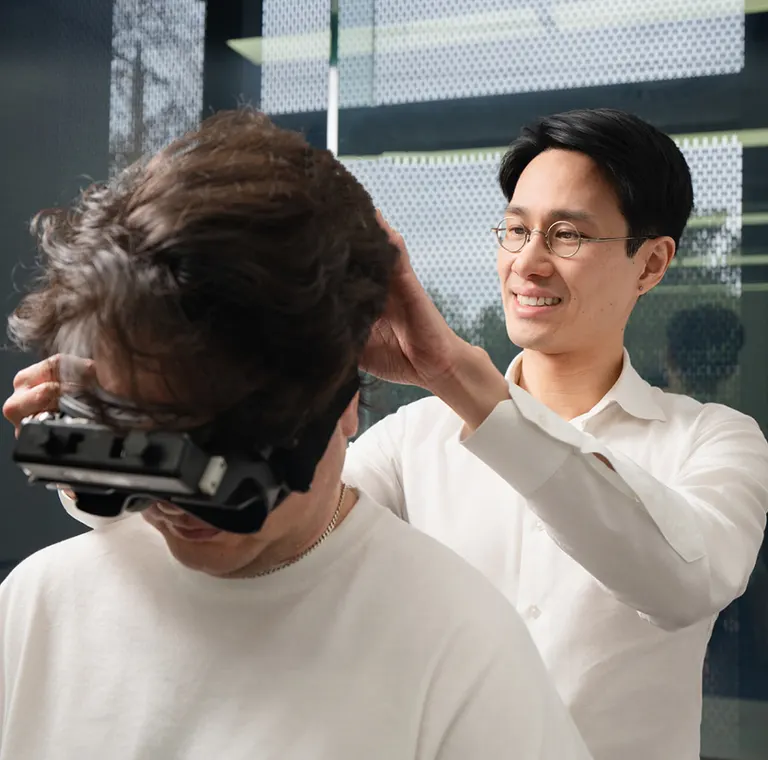
This matters because the correct treatment manoeuvre depends on which ear and which canal are involved. At the Melbourne Balance Clinic, we use high-speed infrared goggles to track eye movements whilst performing positional testing to confidently diagnose the affected canal and appropriately tailor therapy.
How Common Is BPPV?
BPPV is common and is one of the most frequent diagnoses made in dizziness and balance clinics.
A large epidemiological study reported a lifetime prevalence of BPPV of 2.4%, with a one-year prevalence of 1.6%. The same study found that BPPV caused medical consultation, interruption of daily activities or sick leave in many affected people, while only a small proportion received effective treatment.
BPPV is particularly important in older adults. Reviews of dizziness in older people describe BPPV as one of the most common vestibular causes of dizziness in this age group; it is also known to be associated with an increased risk of falls.
Because BPPV is often treatable, recognising it matters. A patient may have weeks or months of positional vertigo when a targeted repositioning manoeuvre could potentially provide significant improvement.
Is BPPV Dangerous?
BPPV itself is usually not dangerous in the sense that it is not usually caused by a tumour, stroke or progressive neurological disease. However, its effects can still be serious.
A sudden spin when getting out of bed, climbing stairs, showering, driving, walking outside or turning quickly can increase the risk of falls, injury or loss of confidence. Some patients start avoiding movement, exercise or social activities because they are worried symptoms will return.
BPPV can also be frightening when it first occurs. Many people worry they are having a stroke or another serious neurological event. While BPPV is common and treatable, it is still important to seek medical assessment if symptoms are new, severe, unusual or associated with neurological signs.
BPPV has also been associated with poorer balance function on static and dynamic testing, which can subsequently increase the risk of falls if left untreated.
When Should Vertigo Be Assessed Urgently?
BPPV usually causes brief positional vertigo without these neurological symptoms. If the symptom pattern does not fit BPPV, or if there are red flags, urgent assessment may be needed.
How Is BPPV Diagnosed?
BPPV is usually diagnosed through a clinical assessment and positional testing.
Your doctor will ask about what triggers the vertigo, how long it lasts, whether it occurs when rolling over or lying down, and whether there are associated symptoms such as hearing changes, headache, neurological symptoms or ongoing imbalance.
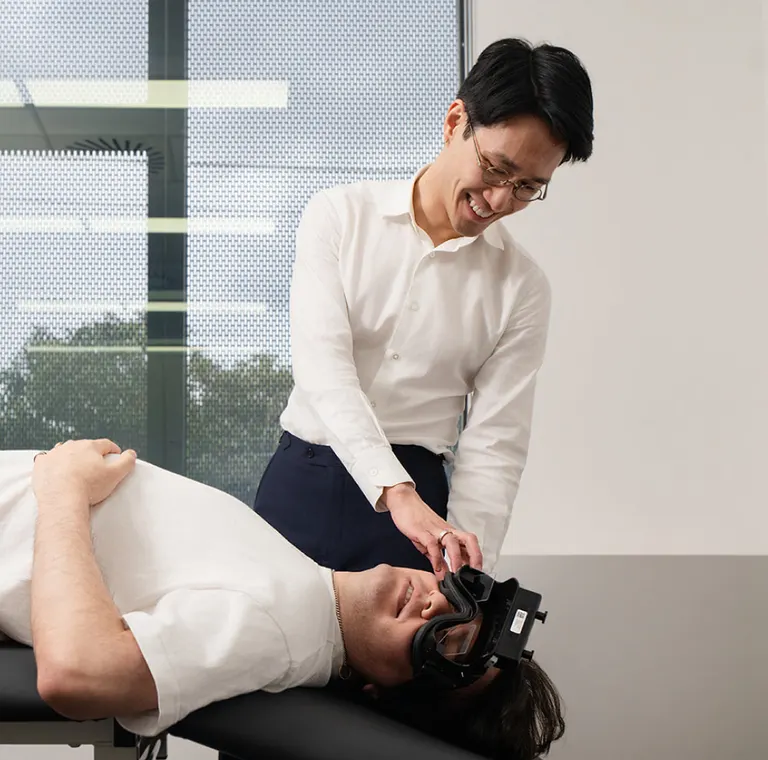
The examination may include specific positional tests. These tests move the head and body into positions that can trigger BPPV. During testing, your doctor looks for characteristic eye movements, called nystagmus, which help identify the affected ear and canal.
The Dix-Hallpike test is commonly used to assess posterior canal BPPV. A supine roll test may be used when horizontal canal BPPV is suspected.
The direction, timing and duration of the eye movements help guide diagnosis and treatment. This is why accurate assessment is important. Treating the wrong side or wrong canal may be ineffective or may worsen symptoms temporarily.
What Is the Treatment for BPPV?
BPPV is usually treated with canalith repositioning manoeuvres. These are specific head and body movements designed to move the displaced crystals out of the semicircular canal and back into the correct area of the inner ear.
The Epley manoeuvre is commonly used for posterior canal BPPV. Other manoeuvres may be used depending on the canal involved. These may include Semont, Lempert/barbecue roll, Gufoni or other specialised manoeuvres.
Medication does not fix BPPV. Anti-nausea or vestibular suppressant medication may sometimes be used briefly for severe symptoms, but it does not move the crystals back into position. The key treatment is usually mechanical repositioning.
Why Might BPPV Keep Coming Back?
BPPV can recur. Some people have one episode that resolves and never returns. Others experience repeated attacks over months or years.
Recurrence may occur because crystals become dislodged again. It may be more likely in older adults, after head injury, in people with migraine, or in those with other inner ear conditions. Sometimes there is no clear reason.
If BPPV keeps returning, it is important to confirm the diagnosis. Recurrent positional dizziness may be due to BPPV, but it can also overlap with vestibular migraine, PPPD, Ménière’s disease or other vestibular disorders.
A balance clinic assessment can help determine whether the problem is truly recurrent BPPV, whether a different canal is involved, or whether another condition is contributing.
What If Standard BPPV Treatment Has Not Worked?
Most BPPV improves with the correct repositioning manoeuvre, but some cases are more complex.
Treatment may be less straightforward if the affected canal is difficult to identify, if more than one canal is involved, if both ears are affected, if symptoms are very severe, or if neck or back problems make standard manoeuvres difficult.
Some patients have atypical eye movement findings or symptoms that resemble BPPV but do not behave like typical BPPV. In these cases, further vestibular assessments and MRI scans may be needed.
Melbourne Balance Clinic can assess complex or recurrent positional vertigo and may use specialised testing on the Rotundum Positioning Chair where appropriate. This can help identify the affected canal more accurately and guide treatment in a controlled setting.
Can I Do BPPV Exercises at Home?
Some people are given home exercises for BPPV. These may be useful in selected cases, particularly when the diagnosis is clear and the correct exercise has been demonstrated.
However, home exercises are not always the best first step. BPPV treatment depends on which ear and which canal are involved. A manoeuvre that is helpful for one type of BPPV may be ineffective for another.
Doing repeated exercises without a clear diagnosis can also make some people feel worse, particularly if the problem is not BPPV or if vestibular migraine is also present.
It is generally best to have an accurate assessment first, especially if symptoms are new, severe, recurrent, atypical or have not responded to previous treatment.
How Is BPPV Different from Vestibular Migraine?
BPPV and vestibular migraine can both cause vertigo. BPPV usually causes brief spinning vertigo triggered by specific head positions. The spinning often lasts seconds and may occur when rolling over in bed, lying down, sitting up, looking up or bending forward.
Vestibular migraine may cause dizziness or vertigo lasting minutes, hours or days. It may be triggered by poor sleep, stress, hormonal change, screens, busy visual environments, travel, light or sound. Patients who are already dizzy may also notice that head movement exacerbates this sensation, which can be mistaken for the positional vertigo commonly reported in BPPV. Less often, vestibular migraine can mimic BPPV causing only positional vertigo/dizziness lasting seconds.
The two conditions can overlap and have a bidirectional relationship. Some people with migraine are more prone to BPPV, and an episode of BPPV can trigger ongoing dizziness or motion sensitivity experienced with vestibular migraine. This is one reason a careful history and examination are important.
Why Choose Melbourne Balance Clinic for BPPV?
Melbourne Balance Clinic provides focused assessment and treatment for vertigo, dizziness and balance disorders, including BPPV.
Our approach is designed to identify the specific cause of positional vertigo, not simply label all spinning dizziness as “vertigo”. Ultimately, vertigo is a symptom and part of a clinical history/syndrome, rather than a final diagnosis. We assess the pattern of symptoms, perform appropriate positional testing, consider whether vestibular migraine or another condition may be contributing, and recommend treatment based on the affected ear and canal.
For straightforward BPPV, treatment may be relatively simple. For complex, recurrent or atypical BPPV, a more detailed vestibular assessment can make a significant difference.
The aim is to provide clear answers, practical treatment and a plan for what to do if symptoms return.
When Should I Book an Appointment?
You should consider booking an appointment if you experience spinning vertigo when rolling over in bed, lying down, sitting up, looking up, bending forward or turning your head.
You may also benefit from assessment if you have been told you have BPPV but treatment has not worked, if symptoms keep returning, if you feel unsteady between episodes, or if your symptoms are affecting your confidence and daily life.
Book an Appointment for BPPV in Melbourne
BPPV can be frightening and disruptive, but it is often treatable once the correct diagnosis is made.
Melbourne Balance Clinic provides specialist assessment and treatment for benign paroxysmal positional vertigo, including complex or recurrent positional vertigo.
Contact Melbourne Balance Clinic to arrange an appointment and take the next step towards understanding and treating your vertigo.
Last reviewed October 2026
Sources8 references
- Healthdirect; Vertigo: https://www.healthdirect.gov.au/vertigo
- PubMed; Epidemiology of benign paroxysmal positional vertigo: a population based study: https://pubmed.ncbi.nlm.nih.gov/17135456
- PMC PubMed Central; Benign paroxysmal positional vertigo in the elderly: current insights: https://pmc.ncbi.nlm.nih.gov/articles/PMC6223343
- Australian Family Physician (AFP); The Epley manoeuvre For benign paroxysmal positional vertigo: https://www.racgp.org.au/afp/2013/january-february/the-epley-manoeuvre
- Better Health Channel; Benign paroxysmal positional vertigo (BPPV): https://www.betterhealth.vic.gov.au/health/conditionsandtreatments/benign-paroxysmal-positional-vertigo-bppv
- Kollén, L., Frändin, K., Möller, M., Olsén, M.F., Möller, C., 2012. Benign paroxysmal positional vertigo is a common cause of dizziness and unsteadiness in a large population of 75-year-olds. Aging Clin Exp Res 24, 317–323. https://doi.org/10.1007/BF03325263
- Chen, J., Zhao, W., Yue, X., Zhang, P., 2020. Risk Factors for the Occurrence of Benign Paroxysmal Positional Vertigo: A Systematic Review and Meta-Analysis. Front. Neurol. 11. https://doi.org/10.3389/fneur.2020.00506
- Pauwels, S., Casters, L., Lemkens, N., Lemmens, W., Meijer, K., Meyns, P., Van De Berg, R., Spildooren, J., 2023. Gait and Falls in Benign Paroxysmal Positional Vertigo: A Systematic Review and Meta-analysis. Journal of Neurologic Physical Therapy 47, 127–138. https://doi.org/10.1097/NPT.0000000000000438